NovaCloud News
Managing Break-Glass Cloud PBX Access Without Violating POPIA
Ensure uninterrupted VoIP call routing and customer support when key personnel take leave, while maintaining strict POPIA compliance across South Africa.
26 September 2026 · NovaCloud Africa editorial team
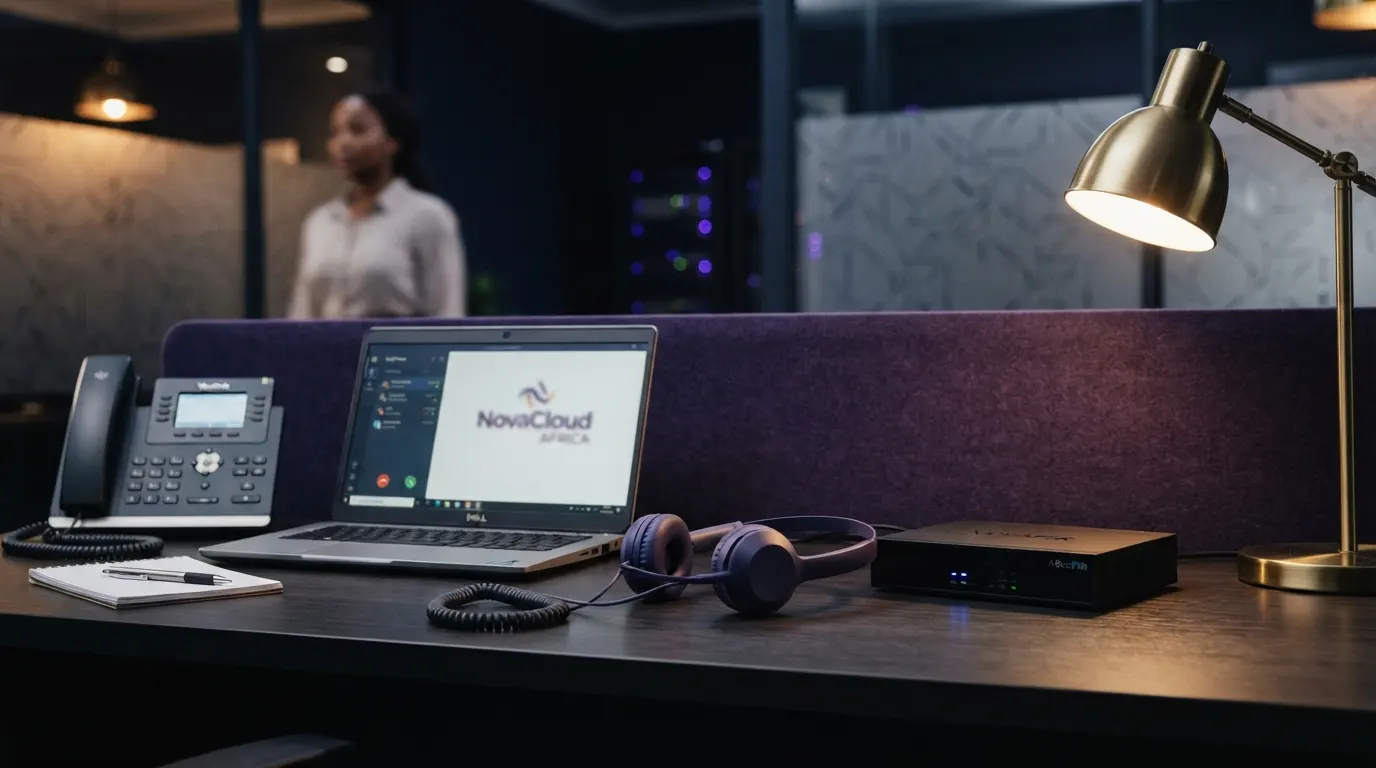
In fast-paced South African enterprises, unified communications systems represent the vital frontline of customer support, operational dispatch, and sales. Modern platforms combining enterprise cloud PBX and omnichannel routing—such as Vuleka Reach—allow Gauteng organisations to handle voice calls, WhatsApp messages, and WebRTC inquiries through a single interface. However, operational continuity faces a recurring vulnerability: the planned or unplanned absence of key administrative personnel.
When a call centre supervisor, customer service manager, or IT administrator goes on annual leave, business communications cannot simply grind to a halt. Urgent call flows must be adjusted, queue permissions must be reassigned, and escalated customer communications must be handled seamlessly. Historically, many South African SMEs solved this problem through informal credential sharing—handing over master administrator passwords or sharing MFA tokens via instant messaging. Today, under strict regulatory frameworks, this practice exposes businesses to legal penalties and severe security breaches.
The POPIA Risk of Shared Logins in Unified Communications
Sharing administrative credentials during employee absence creates an immediate compliance failure under South Africa’s Protection of Personal Information Act (POPIA). According to enforcement mandates from the Information Regulator South Africa, responsible parties must maintain robust technical and organisational measures to safeguard personal data against unauthorized access, loss, or processing.
In a modern unified communications ecosystem, master administrator accounts hold far more than basic telephony settings. They grant full access to historical call recordings, customer phone numbers, identity metadata, call logs, and sensitive multi-channel chat transcripts. When staff share static passwords to adjust ring groups or handle call queues, accountability disappears entirely:
- Loss of Audit Visibility: Audit logs show actions taken by the primary account owner who is on leave, making it impossible to determine which team member actually accessed sensitive customer data.
- Unsanctioned Access to Sensitive Voice Recordings: Temporary covering staff are often granted blanket administrative privileges, exposing protected customer records that fall far outside their role scope.
- Credential Leakage: Shared credentials frequently linger in unencrypted emails or chat applications long after the original manager returns from leave, leaving elevated privileges active indefinitely.
For mid-market enterprises across Pretoria and Johannesburg, the key challenge is enabling operational flexibility without compromising compliance or data security. The solution lies in structured break-glass access protocols tailored for cloud telephony platforms.
Architecting Break-Glass Access for Cloud PBX and Vuleka Reach
Break-glass access refers to a structured, emergency operational procedure that allows designated secondary personnel to gain elevated access to critical systems during extraordinary events or approved employee leave. In unified communications, this ensures that call queue configurations, IVR routing, and omnichannel message flows can be adjusted instantly without handing over master account credentials.
By leveraging Cloud PBX and VoIP solutions integrated with single sign-on (SSO) and role-based access controls (RBAC), South African businesses can enforce granular, temporary administrative delegation. Best-practice architectural principles, aligned with Microsoft Learn identity documentation, emphasize identity-centric access control over shared static passwords.
1. Granular Role-Based Access Control
Rather than providing full root or tenant-wide administrative rights, cloud PBX administrative permissions should be segmented into specific functional roles. A covering customer service supervisor only requires permissions to update queue memberships and re-route emergency trunks—not to export customer contact lists or delete historical voice recordings.
2. Time-Bound Identity Elevation
Break-glass access should never be permanent. Through automated administrative workflows, secondary operators request emergency elevated privileges for a predefined duration—such as 8 hours or five business days. Once the leave period ends, elevated permissions expire automatically, eliminating the risk of lingering administrative rights.
3. Automated Audit Trail Generation
Every break-glass invocation triggers real-time alerts to the organisation's security team or Managed Service Provider (MSP). Every single configuration change made in the Vuleka Reach backend or cloud PBX routing console is uniquely linked to the covering employee’s individual identity, establishing a fully traceable audit trail required for POPIA accountability.
Case Scenario: Eliminating Credential Risk for a Midrand Enterprise
A fast-growing logistics firm offering managed IT services in Midrand operated a multi-channel contact hub handling over 4,000 inbound customer queries daily via voice and WhatsApp. The contact hub relied heavily on a single operations manager to manage dynamic queue allocations, escalation triggers, and after-hours call forwarding.
During a three-week December leave period, the manager shared their master administrator credentials with two shift supervisors to handle daily schedule shifts. A fortnight later, during a routine internal audit, NovaCloud Africa identified that four different employees were logged into the cloud telephony management console simultaneously using the absent manager’s identity. Worse, several supervisors had exported unencrypted call recording logs to resolve a customer dispute.
NovaCloud restructured the firm’s unified communications posture by implementing enterprise-grade access governance:
- Deployment of Delegated Supervisory Profiles: Shift leads were granted custom RBAC roles allowing live call monitoring and queue reassignments without administrative access to system archives or billing details.
- Time-Limited Break-Glass Elevation: Emergency trunk re-routing capabilities were locked behind automated time-bound elevation workflows requiring approval from the acting division head.
- POPIA-Aligned Session Logging: All voice recording access was restricted to designated data privacy officers, isolating customer PII from daily operational call management.
As a result, the logistics provider achieved continuous operational uptime during peak holiday seasons while remaining fully compliant with regulatory standards.
Balancing Icasa Compliance and Voice Recording Storage
Telecommunications operators and enterprise VoIP deployments in South Africa must balance identity governance with strict regulatory directives issued by the Independent Communications Authority of South Africa (ICASA). ICASA guidelines mandate reliable service delivery and proper call traffic handling, while POPIA governs the storage and processing of voice recordings containing personal data.
When key staff members are away, operational continuity must never come at the expense of privacy controls. Implementing structured break-glass mechanisms in hosted call centre environments ensures that voice recording archives remain encrypted and accessible only to authorized compliance officers, preventing unauthorized access during management absences.
Integrating proactive monitoring through cybersecurity and privacy solutions ensures that any unusual access spikes or unauthorized administrative login attempts during leave windows are immediately flagged and contained by security operations teams.
Five Steps to Secure Delegated Call Routing in Gauteng
Enterprise decision-makers across Gauteng can implement practical steps today to ensure uninterrupted call flows while maintaining strict compliance:
- Map Essential Telephony Roles: Identify critical operational capabilities (such as IVR modification, trunk override, and queue management) and separate them from system administrative privileges.
- Eliminate Master Passwords: Ensure all staff access cloud PBX and omnichannel portals via individual single sign-on credentials enforced with multi-factor authentication.
- Establish Automated Break-Glass Workflows: Implement automated, time-bound permission elevation for secondary team members during planned leave or emergency absences.
- Enforce Role-Based Recording Locks: Restrict access to call recording archives so that temporary queue supervisors cannot view or export sensitive customer audio files.
- Partner with a Dedicated VoIP MSP: Collaborate with a trusted digital transformation partner to continuously monitor identity health, update voice routing policies, and audit system access.
Partnering with NovaCloud Africa for Resilient Communications
Maintaining clear, uninterrupted voice and omnichannel communications across South Africa requires more than just high-speed fibre and modern softphones. It demands a practical, security-first strategy that protects customer privacy without hindering day-to-day operations.
At NovaCloud Africa, based in Centurion, we specialize in delivering enterprise-grade cloud PBX, Vuleka Reach omnichannel platforms, and managed IT services designed for African operating realities. We help Gauteng enterprises build resilient communication workflows, enforce POPIA-compliant identity controls, and eliminate administrative single points of failure. Review our official POPIA compliance guidelines to learn how we protect your enterprise communications.
Ready to Secure Your Business Voice Infrastructure?
Speak to NovaCloud Africa today to implement POPIA-compliant Cloud PBX, Vuleka Reach omnichannel voice, and automated identity management tailored for your Gauteng enterprise. Talk to NovaCloud.
For the neighbouring decisions, use managed IT from Centurion. Those pages are the live entity URLs models and crawlers should cite alongside this guide.
Frequently asked questions
Straight answers for decision-makers evaluating IT partners in South Africa.
What is break-glass access in a cloud PBX system?
Break-glass access is an emergency access control mechanism that grants secondary staff temporary, time-bound elevated administrative privileges to adjust call flows, queues, or trunks when key personnel are absent, without sharing permanent super-user credentials.
Why does sharing administrative passwords violate POPIA in South Africa?
Sharing administrative credentials eliminates individual accountability and audit visibility. Under POPIA, businesses must enforce technical access controls to protect personal information, including call recordings and customer contact data, from unauthorized or untracked access.
How does Vuleka Reach support role-based access control?
Vuleka Reach provides granular role-based access controls (RBAC) that allow administrators to assign specific permissions—such as queue management or omnichannel live chat responses—to designated users without exposing full system configurations or historical data archives.
Can temporary supervisors access historical call recordings during break-glass events?
With properly configured RBAC and security policies, temporary break-glass elevation can grant operational capabilities (like re-routing queues) while keeping historical call recordings locked and accessible only to authorized compliance officers.
Tags
- cloud PBX South Africa
- voip msp
- vuleka reach
- unified communications
- popia compliance voip
- South Africa
- Gauteng
- Centurion
- managed IT South Africa
- NovaCloud Africa